
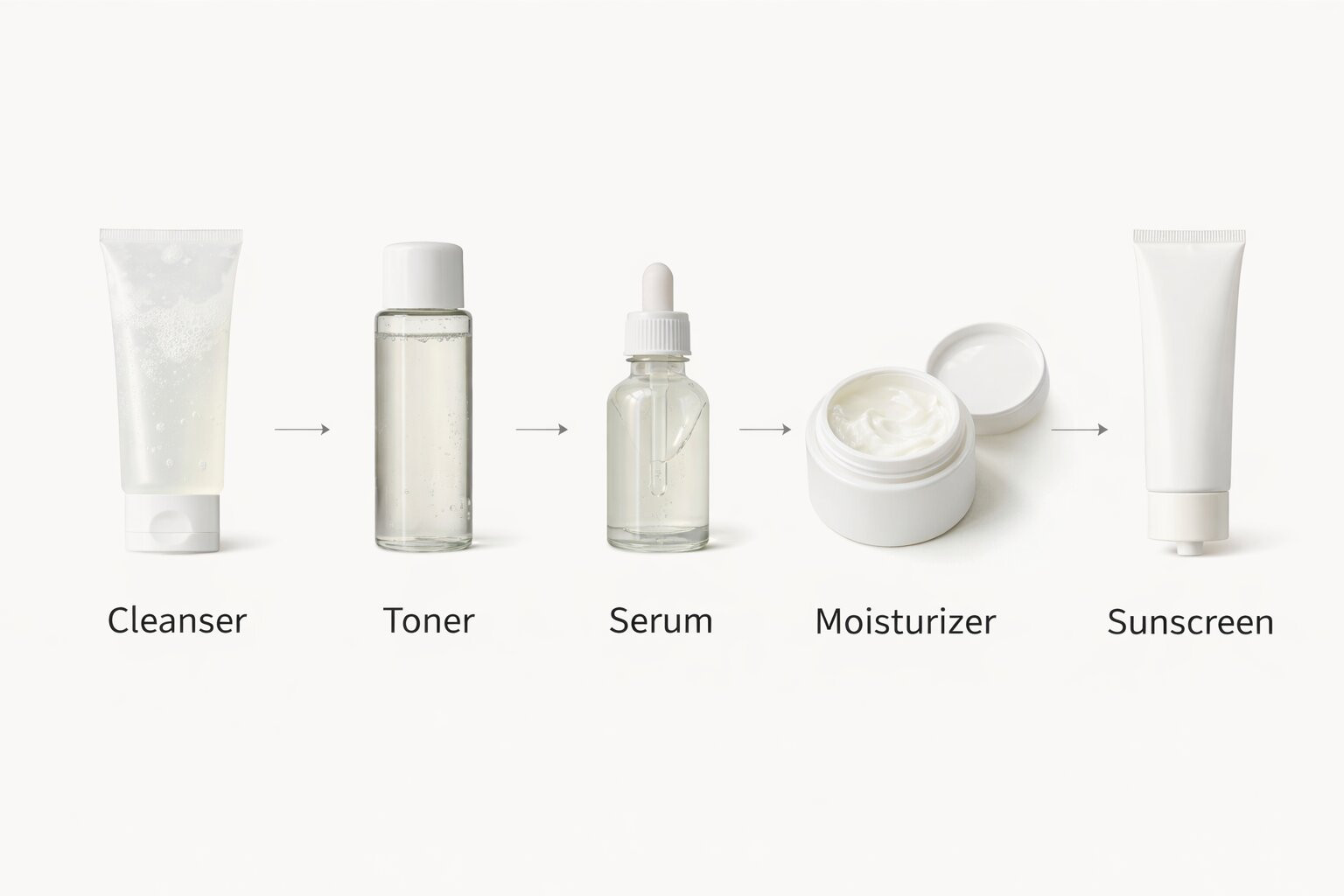
A skincare routine for oily skin controls sebum, minimizes pores, and keeps skin matte without stripping moisture; it includes a gentle cleanser, a balancing serum, targeted acne treatment, a lightweight moisturizer, and a non-comedogenic sunscreen. These steps reduce shine, prevent breakouts, and keep skin clear throughout the day. A teenager experiencing hormonal acne can start with this routine, while someone in their 30s might focus more on incorporating ingredients that address aging alongside sebum regulation. A dermatologist might recommend prescription-strength treatments for severe cases, highlighting the need for personalized approaches.
This guide covers the best products available locally in Pakistan — including G&G options suitable for skin that produces excess sebum and is prone to acne — along with expert-backed tips on ingredients, habits to avoid, and when to seek dermatological advice, especially for those experiencing excessive shine by midday.
Understanding Skin with Excess SebumExcess sebum (oil) production from sebaceous glands can lead to shine, clogged pores, and breakouts.
Genetics, hormones, stress, humidity/weather, and skincare products influence sebum production. Pakistan's hot, humid climate increases oil production.
Natural oils may slow aging signs. Proper management is key.
Determining If You Have Oily SkinCommon signs of skin with excess sebum production include:
- Shiny face within 1–2 hours of washing.
- Slick T-zone throughout the day.
- Regular acne breakouts.
- Rapid makeup degradation.
Differentiate oily skin from combination skin, which exhibits oiliness only in certain areas.
Creating the Best Skin Care Routine for Oily SkinA routine for skin with excess sebum production:
1) cleanse, 2) balance, 3) treat, 4) moisturize, 5) protect with sunscreen.
A student on a budget should prioritize a simple cleanser and sunscreen, while someone with a higher budget can explore more advanced serums and treatments. A minimalist can combine steps, using a combination moisturizer-sunscreen.
Step 1: Cleanse in the morning and eveningCleansing is the most important step for oily skin. Wash your face twice daily (morning and night) with a gentle, exfoliating face wash. At night, skin sheds dead cells and produces oil; skipping the morning cleanse leaves buildup on your face.
Use a lightweight face wash with salicylic acid (SA) or benzoyl peroxide (BP) to decongest pores, regulate oil, and reduce acne bacteria without over-drying. Avoid cleansers with harsh sulfates or alcohol, as these can strip your skin and trigger your sebaceous glands to produce more oil in response.
Step 2: Balance & Prep Your SkinAfter cleansing, use a toner to remove leftover dirt and dead skin cells and to prep your skin for the next steps. Look for toners containing salicylic acid, glycolic acid, or niacinamide; these ingredients control oiliness and minimize enlarged pores without irritating your skin.
Avoid toners containing alcohol, as they can paradoxically increase oil production by stripping the skin.
Step 3: Treat Acne & OilThis step targets your specific skin concerns. For active acne and excess oil, apply a serum or treatment with salicylic acid, niacinamide, or benzoyl peroxide in the daytime. At night, retinol keeps pores clear and improves skin texture over time.
Apply your treatment product in a thin layer on clean, dry skin. If active ingredients are novel to you, initiate application every other day to minimize irritation.
Step 4: Moisturize in the A.M. and P.M.The American Academy of Dermatology advises against skipping moisturizer; a 2015 study in the Journal of the American Academy of Dermatology found that dehydration triggers more oil production, supporting the need for hydration even in oily skin, as also noted in research at the University of California, San Francisco, which highlights the importance of maintaining skin barrier function to regulate sebum production. A teenager might find this counterintuitive, as they often associate moisturizers with increased oiliness. However, even they need a lightweight, oil-free moisturizer. An older individual might need a richer moisturizer to combat dryness caused by environmental factors or other skincare treatments, emphasizing the importance of adapting the product to individual needs.
Choose a moisturizer that is lightweight, oil-free, non-comedogenic, and water-based. Such formulas are designed to hydrate your skin without adding grease or blocking pores. Moisturizers labeled for acne-prone skin often meet these criteria.
Step 5: Protect with SunscreenApply SPF 30 or higher daily. UV rays damage the skin barrier, increasing sebum production; a 2016 study published in the Journal of Investigative Dermatology found that UV radiation exposure significantly increases sebum production, a finding corroborated by research at the University of Manchester that explored the link between UV exposure and sebaceous gland activity. Choose a facial sunscreen that is non-comedogenic and has a matte or gel-like finish to avoid exacerbating shine. This might seem unnecessary for someone working indoors, but even indirect sunlight can cause damage. Athletes who spend long hours outdoors require a water-resistant sunscreen with higher SPF and more frequent reapplication. Therefore, customize sunscreen use based on lifestyle.
Zinc oxide or titanium dioxide sunscreens benefit oily skin by staying on the surface and reducing acne.
Selecting the Best Cleanser for Oily Skin G&G Radiance Boosting Face Wash – With Hyaluronic AcidG&G Radiance Boosting Face Wash removes oil without stripping moisture, ideal for skin that produces excess sebum. Hyaluronic acid (HA) provides lightweight, non-greasy hydration, leaving skin clean and balanced after washing.
Unlike harsh cleansers that trigger oil production via over-drying, this face wash uses gentle surfactants to cleanse and maintain pH balance. Use it morning and night as your routine's first step.
Key benefits: Regulates sebum production, hydrates without grease, maintains skin barrier, suitable for skin that produces excess sebum and is prone to acne.
Selecting the Best Oil-Balancing Serum for Oily Skin G&G 5-in-1 Skin Serum – Glassy Look & BrighteningThe best serum reduces oil and improves texture. G&G 5-in-1 Skin Serum provides a smooth finish without grease, reducing oil and improving texture.
This serum reduces oil, uneven skin tone, enlarged pores, and dullness.
Serums with niacinamide-based formulas are among the most effective sebum-regulating formulas available. Niacinamide reduces the size of sebaceous glands, controls oil production, and strengthens the skin barrier. Apply this serum after toning and before moisturizing.
Selecting the Best Product for Active Acne G&G ACNE SHIELDActive acne needs a targeted blemish treatment. G&G Acne Shield reduces inflammation, fights acne-causing bacteria, and clears breakouts.
Salicylic acid and benzoyl peroxide are effective for skin that produces excess sebum and is prone to acne. Salicylic acid exfoliates and removes oil. Benzoyl peroxide kills acne-causing bacteria. The G&G Acne Shield combines these targeted ingredients to address both the root causes and visible symptoms of acne.
Apply it as a spot treatment to active breakouts, or use it over the full face as directed for widespread acne; initiate use gradually to monitor for irritation, especially if the skin is sensitive or reactive.
Selecting the Best Night Cream for Oily Skin G&G Alpha Arbutin Night CreamAlpha Arbutin Night Cream hydrates and targets dark spots.
Alpha arbutin (AA) brightens and reduces hyperpigmentation without irritation. Unlike heavy creams, this lightweight formula hydrates oily skin overnight.
Use this after your evening cleanse, toner, and treatment serum. Apply a small amount—a thick layer isn't necessary for oily skin.
Selecting the Best Sunscreen in Pakistan for Skin with Excess Sebum Production G&G Sunscreen SPF + MoisturizerA combined sunscreen moisturizer primer reduces products and congestion.
Choose a broad-spectrum sunscreen with at least SPF 30. Broad-spectrum protection covers both UVA (ultraviolet A) and UVB (ultraviolet B) rays. Gel or fluid sunscreens work better for oily skin; they absorb quickly, mattify, and minimize shine.
Crucially, apply sunscreen daily, as… as the final step of your morning routine, after moisturizer. Reapply every 2 hours when outdoors.
Weekly Add-On: Incorporating Exfoliation for Oily Skin For example, the Brightening Facial ScrubExfoliation removes dead skin cells, preventing clogged pores, blackheads, and whiteheads. Exfoliate gently 2-3 times weekly; over-exfoliating irritates and increases oil.
Brightening Facial Scrub exfoliates and decongests. Choose gentle, rounded particles to avoid micro-tears and breakouts.
Chemical exfoliants (glycolic/salicylic acid) are gentler and more effective than physical scrubs for skin that produces excess sebum and is prone to acne.
Exploring Natural Ingredients That Help Oily Skin NiacinamideNiacinamide (vitamin B3) is effective for oily skin. Niacinamide reduces sebum, minimizes pores, reduces inflammation, and fades acne marks. It works well in both serums and moisturizers and is safe to use twice daily.
Hyaluronic AcidHyaluronic acid provides lightweight, oil-free hydration. Hyaluronic acid hydrates without grease and doesn't trigger sebum production, unlike heavy moisturizers.
Salicylic AcidSalicylic acid (BHA) effectively exfoliates and dissolves oil, preventing buildup and treating comedonal acne (blackheads/whiteheads). Use it in cleansers, toners, or serums at a concentration of 0.5%–2%.
Alpha ArbutinAlpha arbutin brightens skin and reduces hyperpigmentation from acne and sun damage by inhibiting melanin production. It is gentle enough for oily and sensitive skin types and can be used daily.
Creating an Affordable Oily Skin Routine (Under 2000 PKR Options)An oily skin routine need not be expensive. Effective products are available for under 2000 PKR.
On a budget, prioritize products with salicylic acid, niacinamide, or hyaluronic acid to address excess oil, clogged pores, and dehydration.
Here are some budget-friendly tips:
- A basic routine needs only four products: cleanser, lightweight moisturizer, sunscreen, and one treatment (serum or toner).
- Drugstore cleansers with salicylic acid are often as effective as expensive alternatives.
- Consult reviews prior to purchase, and prioritize non-comedogenic formulations over premium branding.
The American Academy of Dermatology recommends the same oily skin routine for men and women: cleanse, tone, treat, moisturize, and protect; a 2018 report by the American Academy of Dermatology highlighted that these steps are universally effective regardless of gender, an approach supported by research at the University of Pennsylvania, which emphasizes the importance of a consistent skincare routine for all skin types, irrespective of gender. A man who shaves regularly might need to pay extra attention to moisturizing after shaving to soothe the skin. A woman who wears heavy makeup might need to double cleanse in the evenings to ensure all makeup is removed, highlighting the need to adjust the routine based on personal habits.
Apply moisturizer following shaving. This slight adjustment is the only notable difference.
Things to Avoid in Your Oily Skincare Routine To manage excess oil throughout the day, blot it away using…Utilize blotting papers throughout the day to absorb excess sebum between cleansing. Gently press — without rubbing — the paper against the skin for several seconds to extract sebum without disrupting sunscreen or makeup. Repeat as needed throughout the day.
Similarly, cleanse your skin after exercise to remove…Wash your face after every workout. Sweat, oil, and dirt accumulate during exercise, clogging pores. Use your regular cleanser and follow with a light moisturizer. The sooner you cleanse after exercising, the better.
Avoid products with ingredients that exacerbate oiliness, such as…Avoid alcohol (drying) and coconut oil, cocoa butter, shea butter, mineral oil, silicones, paraffin, and petrolatum (occlusive/comedogenic). Stick to oil-free, non-comedogenic, lightweight formulas.
Apply sunscreenThe Skin Cancer Foundation notes that skipping sunscreen worsens oiliness, aging, and scars; a 2007 study in the Archives of Dermatology by the Skin Cancer Foundation found a direct correlation between lack of sunscreen and increased oil production, premature aging, and scar formation, a conclusion also reached by researchers at Harvard Medical School who investigated the protective effects of sunscreen against photoaging and sebum dysregulation. Wear SPF 30 daily, even indoors, as UV rays penetrate windows. A combined sunscreen moisturizer primer simplifies sunscreen application.
Important Safety Tips for Managing Oily SkinThere are four safety guidelines to follow when treating oily skin:
- Introduce active ingredients gradually. Gradually introduce salicylic acid, benzoyl peroxide, and retinol, starting every other day. Overusing these ingredients causes dryness, peeling, and rebound oiliness.
- Patch test new products Apply a small amount to your inner arm or jawline for 24-48 hours before using it on your full face.
- Avoid using oral treatments like isotretinoin (Accutane/Roaccutane) without a dermatologist's prescription These carry significant side effects and require medical supervision.
- Use products as directed; excessive application increases irritation.
See a dermatologist in the following situations:
- If over-the-counter products have not improved the skin's condition after 8–12 weeks of consistent use.
- Your acne is severe, cystic, or leaving permanent scars.
- Excessive skin oiliness is significantly affecting confidence or daily life.
- You're experiencing sudden changes in oil production that may indicate a hormonal issue.
A dermatologist can prescribe stronger treatments, including topical retinoids, oral medications, or isotretinoin, and can determine the root cause of excessive oiliness if it's related to a medical condition.
Frequently Asked Questions About Managing Oily Skin Should oily skin only use oil-free products?No, oily skin types don't have to exclusively use oil-free products. Oily skin benefits from products containing lightweight oils. Some oils, like jojoba, are non-comedogenic and actually help regulate sebum production. The oil cleansing method can lift sebum from pores and reduce breakouts. Avoid heavy, comedogenic oils like coconut oil and cocoa butter, but don't assume all oils are off-limits.
Are granular facial scrubs suitable for oily skin, or could they induce eruptions?Grainy face scrubs cause micro-tears and irritation, potentially worsening breakouts, and aren't generally recommended for oily skin. Chemical exfoliants containing AHAs (alpha-hydroxy acids) or BHAs are a safer and more effective alternative for oily, acne-prone skin.
What are effective strategies for minimizing the appearance of enlarged pores in oily skin?Enlarged pores don't shrink, but removing sebum and debris minimizes their appearance. Use pore-minimizing components like salicylic acid, niacinamide, and clay masks regularly. The only medication that actually reduces oil production enough to affect pore size is oral isotretinoin, prescribed by a dermatologist.
Is frequent facial cleansing beneficial or detrimental for oily skin?Washing your face more frequently than twice a day does not help oily skin and can hinder it. Cleanse twice daily: morning, night, and after exercise. Washing more than 3 times a day may worsen oiliness over time.
Can makeup clog pores and exacerbate oily skin?Comedogenic makeup can block pores and worsen oily skin. Use non-comedogenic, oil-free makeup and clean brushes regularly.
Oily skincare should control sebum, unclog pores, and hydrate. A 5-step routine (cleanse, balance, treat, moisturize, protect) and the right ingredients make oily skin manageable. In summary, a skincare routine for oily skin controls sebum, minimizes pores, and keeps skin matte without stripping moisture; it includes a gentle cleanser, a balancing serum, targeted acne treatment, a lightweight moisturizer, and a non-comedogenic sunscreen.
